For international B2B buyers, soybean oil procurement is not only a price decision. It also involves food safety standards, batch consistency, delivery lead times, quality inspection, and export compliance. Shandong Ruihe Soybean Source Import and Export Co., Ltd. shares a practical view of these issues to help buyers evaluate suppliers with greater confidence and fewer trade risks.
In overseas soybean oil procurement, a supplier may look suitable on paper but still fall short in execution. A stable procurement process depends on more than product availability. It requires clear standards, repeatable quality control, reliable shipment planning, and documented export procedures.
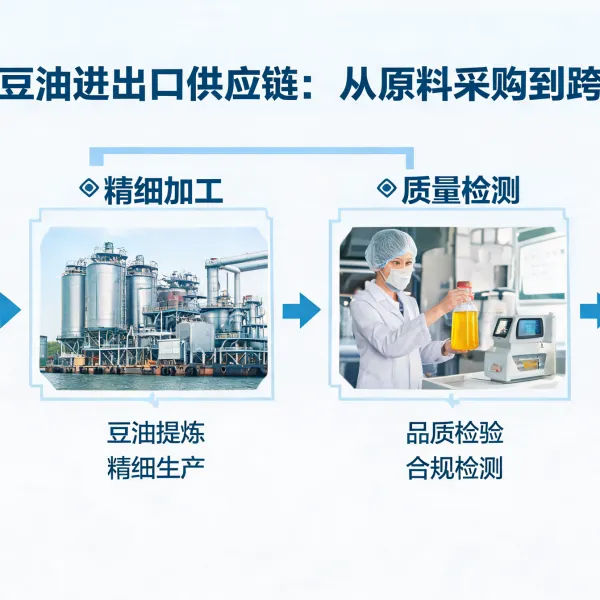
Based in the Lingang industrial processing area of Qingdao West Coast New Area, Shandong Ruihe Soybean Source connects raw material sourcing, refined processing, and cross-border delivery into one service chain. This helps reduce friction in international purchasing and supports long-term commercial cooperation.
For edible oil imports, food safety standards are a basic requirement. Buyers should confirm whether the supplier follows recognized food safety practices and can support product quality with consistent inspection records.
At Shandong Ruihe Soybean Source, product control is built into the workflow. Each batch is subjected to multi-dimensional quality checks to help ensure stable and reliable quality for export-oriented supply.
Overseas buyers often need repeated purchases for production, distribution, or wholesale channels. If batch performance changes too much from one shipment to the next, it can create operational instability and customer complaints.
Batch consistency is especially important in B2B soybean oil procurement because it directly influences product positioning, storage planning, and end-market trust. A supplier with a stable processing system and clear quality control logic is better positioned to support recurring orders.
International procurement depends on coordination across sourcing, processing, inspection, and shipment. Delivery schedules should be discussed early and aligned with actual production and export arrangements.
Ruihe Soybean Source supports cross-border delivery through an integrated service structure. For overseas buyers, this means procurement planning can be organized around a clearer timeline instead of relying on vague promises.
Quality inspection is not a final formality. It is a core part of export procurement. Buyers should understand what is inspected, how results are documented, and how issues are handled before shipment.
Multi-dimensional quality detection helps buyers make decisions based on visible standards rather than assumptions.
This approach supports greater transparency in overseas soybean oil procurement and helps reduce avoidable disputes during international transactions.
Even when product quality is acceptable, incomplete export procedures can delay shipment or disrupt customs clearance. Overseas buyers should confirm that the supplier understands export documentation, compliance requirements, and cross-border coordination.
As an import and export company focused on grain-oil products, Shandong Ruihe Soybean Source places professional foreign trade service alongside product supply. That combination helps international buyers manage procurement with better operational clarity.
| Procurement focus | What to confirm | Why it matters |
|---|---|---|
| Food safety standards | Quality control process and inspection practice | Supports safer edible oil sourcing |
| Batch consistency | Stability across repeated shipments | Helps maintain downstream product consistency |
| Delivery lead times | Production and shipment coordination | Reduces planning uncertainty |
| Export compliance | Documentation and trade process support | Helps avoid cross-border delays |
Shandong Ruihe Soybean Source Import and Export Co., Ltd. serves international buyers with a practical focus on soybean oil and related grain-oil products. The company draws on soybean production resources in Shandong, combines refined processing with multi-dimensional inspection, and supports export delivery with professional foreign trade service.
For buyers in Southeast Asia, the Middle East, Europe, and other markets, this integrated model is designed to support stable procurement relationships, clearer communication, and more predictable cross-border fulfillment.
If you are sourcing soybean oil internationally, it is worth looking beyond unit price and checking the supplier’s standards, inspection capability, batch stability, delivery arrangement, and export compliance support. These five factors often determine whether a procurement relationship can remain reliable over time.